

Weaving Two Games Into One (Without Tangling the Threads!)
Why Level Order Matters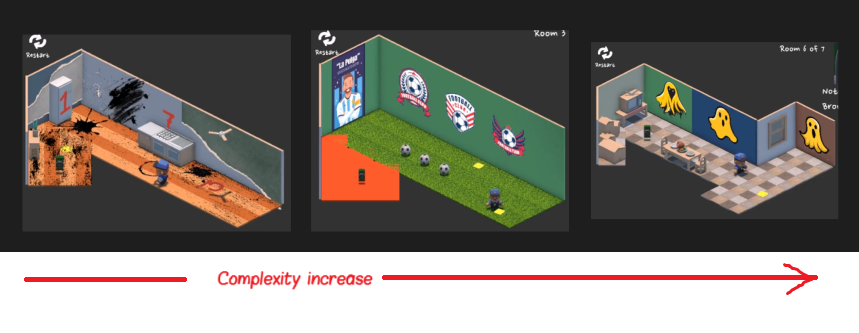
Level progression isn’t just about difficulty but it’s also about how the player feels as they move through the game.
Since our game is actually two games in one (a puzzle room challenge + a logical deduction mystery), the level sequence had to carry both threads forward without confusing the player or breaking the flow.
Two Stories, One Timeline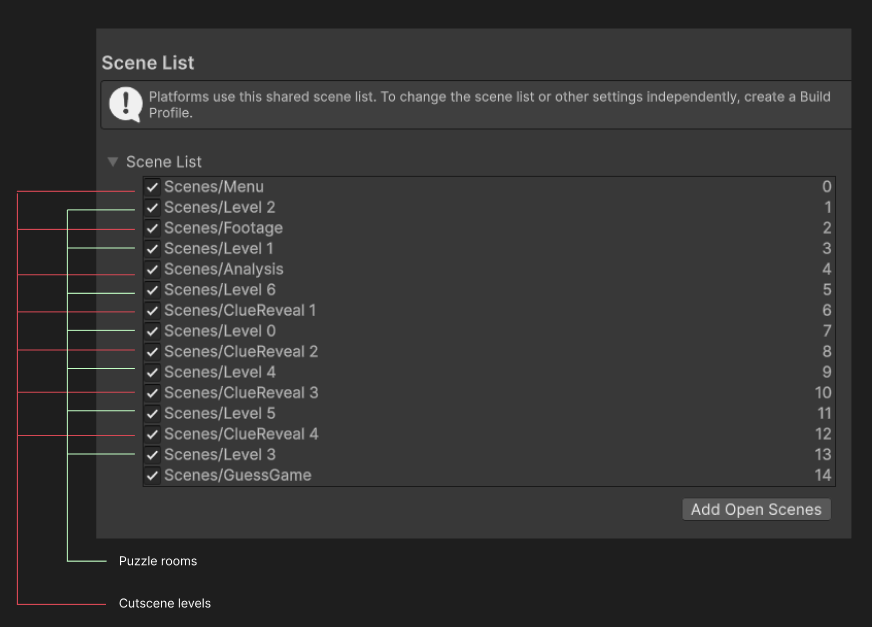
Because the puzzle-solving and the detective-story elements run side-by-side, we had to find a way to weave them together so they always felt connected.
The player hops between a puzzle room and a CCTV-based deduction moment—and both are part of uncovering the bomber’s identity.
If either part felt too separate, the story would disconnect.
If either part came too often, it would feel repetitive.
So sequencing became our glue.
Breaking Monotony With Smart Progression
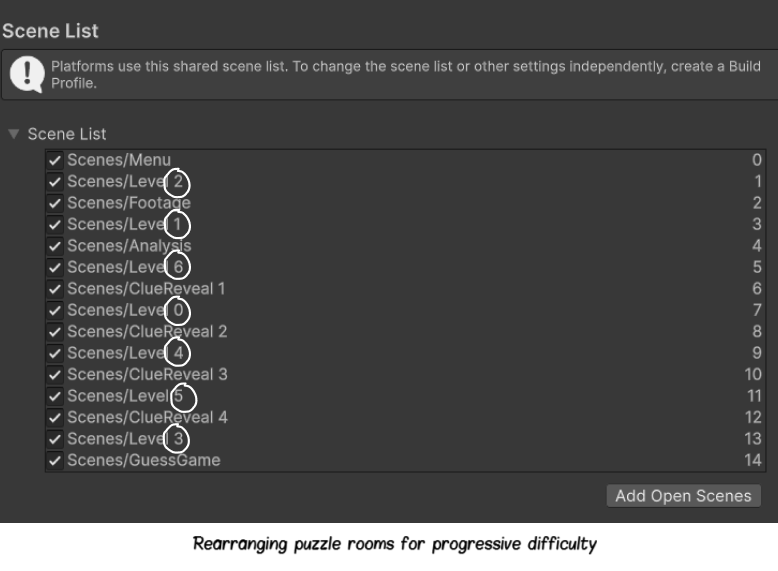
Early playtest feedback told us something important:
-
Some puzzle rooms were too similar when placed next to each other.
-
Some deduction moments felt better when spaced out.
-
Difficulty curves needed smoothing.
So we iterated.
A lot.
Puzzles + Clues: Alternating for Rhythm
The goal was a steady rise in complexity—never a spike, never a boring dip.
Each level needed to feel like a new challenge, not just a remix of the last one.
We already had our “bookends”:
-
The Menu at the start
-
The “Who Is The Bomber?” final reveal at the end
Between them, we wanted a rhythm:
Puzzle → Clue → Puzzle → Clue → …
This created a satisfying alternation:
Your brain gets to work on visual/spatial puzzles, then switches gears to logical deduction, then back again.
It keeps the experience fresh without overwhelming the player.
Cutscenes as Narrative Anchors
Although the puzzle rooms are the core gameplay, the cutscenes are what push the story of the bomber forward.
They act as little narrative “rests” between challenges, giving the player a moment to absorb what they’ve learned and look forward to what comes next.
This prevented the game from feeling like “just puzzles” and kept the detective fantasy alive.
Using Scriptable Objects for Level Flow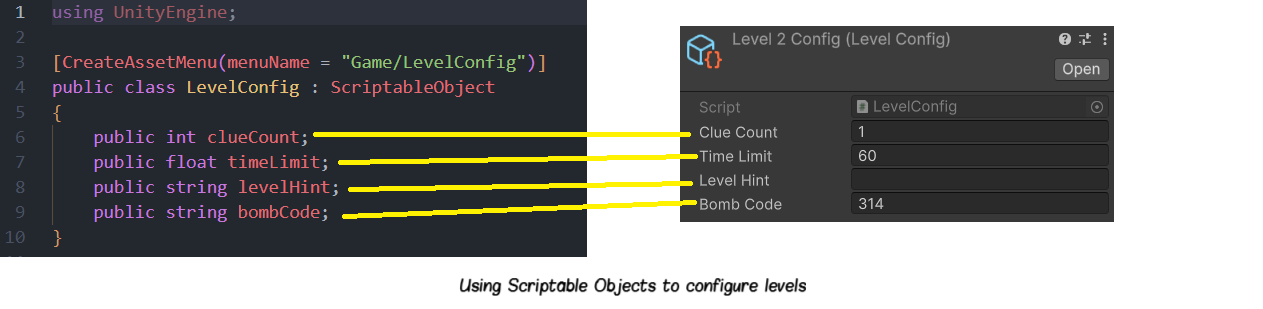
We used Unity’s scene management system, but we kept things flexible by creating a Scriptable Object that stores the exact level order.
This made it easy to:
-
Rearrange scenes based on feedback
-
Swap puzzles around
-
Insert or update cutscenes
-
Increase or decrease difficulty at any point
With this system, tweaking flow wasn’t a headache, it was a few clicks.
This System Let Us Merge Two Games Smoothly
By combining:
Playtesting feedback
A flexible scene-ordering tool
A deliberate alternation between story and puzzles
…we created a sequence that feels purposeful, balanced, and fun without tangling the two halves of the game.
If we ever expand the game, this structure will continue to support new levels, new puzzles, and new story beats with almost no rework.
Learnings:
- Level sequencing is not just ordering, it’s about pacing.
Alternating puzzles and story moments keeps players engaged, prevents fatigue, and makes both halves of the game feel meaningful. - Flexible tools save time under pressure.
Using a Scriptable Object for scene flow let us rearrange, test, and refine the level progression rapidly based on playtester feedback.
Leave a comment
Log in with itch.io to leave a comment.