


Making a Fun Story Without Slowing the Game Down

The Final Level: Put It All Together
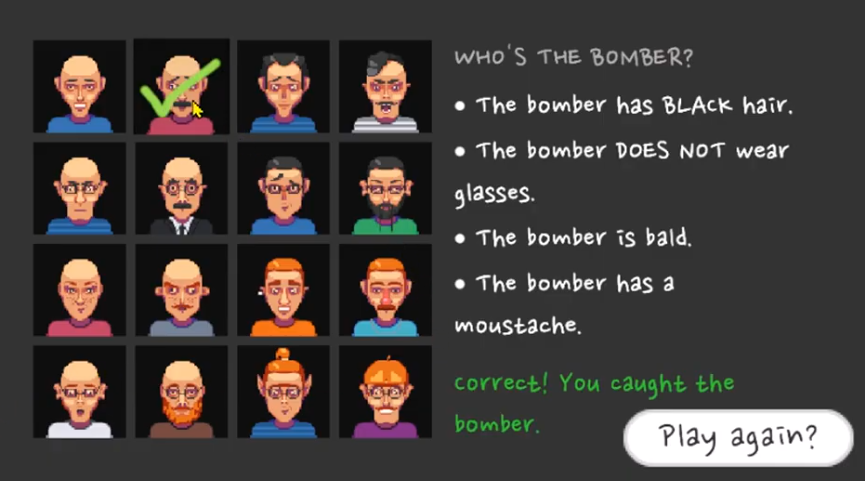
All clues eventually funnel into the final suspect lineup. This is where the player gets to feel like the detective they’ve been roleplaying all along.
And if they get it wrong? That’s okay!
A Good Game Tells a Great Story!
Every time we start a jam project, we remind ourselves of one thing: a good story can elevate even the simplest mechanics. But telling a story well, especially in a short game jam, is always a balancing act. We wanted players to feel like detectives chasing a bomber, not just solving abstract puzzles. So the story had to support the gameplay, not drag it down.
Jam Priorities: Focus on What Gets Judged
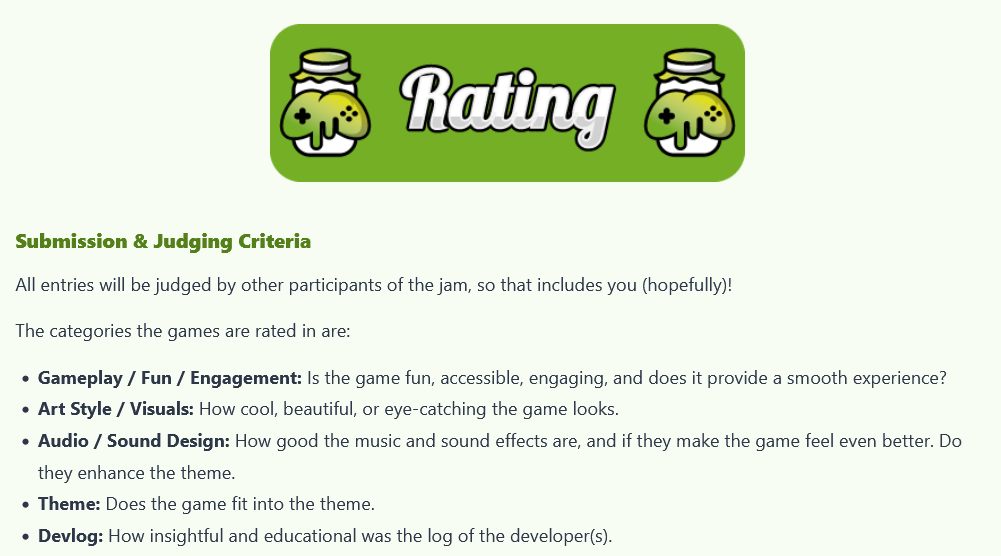
Because this was a jam, we had limited time and a clear set of rating categories: Gameplay, Art Style, Audio, and Theme. So we focused heavily on polishing these, since these are what players actively evaluate.
If this were a Steam release, our approach would have been very different—we’d invest more in worldbuilding, character arcs, narrative structure. But for a jam? We gave priority to the things that matter for this format.
Why Story Matters Here
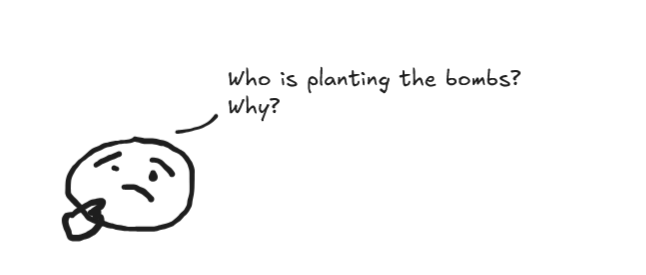
Our core gameplay is logical deduction. You play as a police detective decoding clues to defuse bombs. But one thing wasn’t obvious through gameplay alone: why the bombs were planted or who planted them. We realized this gap early. The mechanics teach you how to think like a detective, but not why these events are unfolding.
So we used story to bridge that gap.
Keeping the Story Interactive (Players Skip Text!)
From previous jams, we learned a painful truth: players skip text-only story dumps. Completely.
Since this isn’t a visual novel, we wanted players to do the story, not just read the story. Interaction keeps them engaged without slowing down the overall pace.
Two Games in One: Clues After Each Level
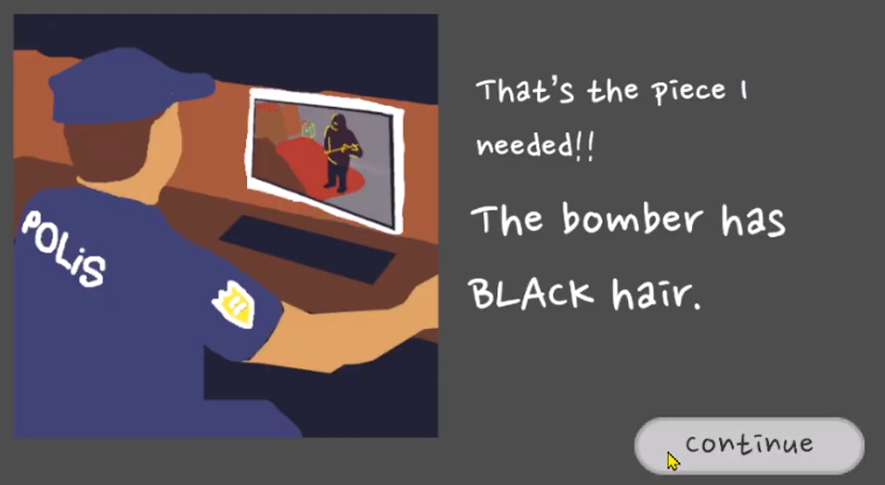
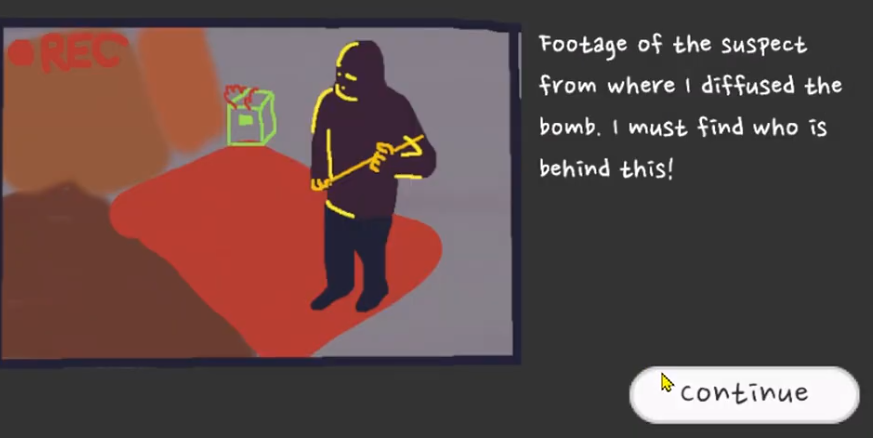
This led us to a fun structure: after each bomb-defusing level, the player earns a clue about the bomber’s identity. By the final stage, the player can piece everything together and expose the culprit.
One game is the main puzzle: defuse the bomb.
The second game is the deduction meta-game: track down the bomber.
Two games for the price of one jam entry!
Designing the Suspect System:
Then came the real question: How do you actually identify the suspect?
We had very limited time, so we chose a tight, clean deduction structure based on physical traits seen in CCTV footage:
- Hair color: red or black
- Bald or not
- Spectacles or not
- Moustache or not
Four binary traits.
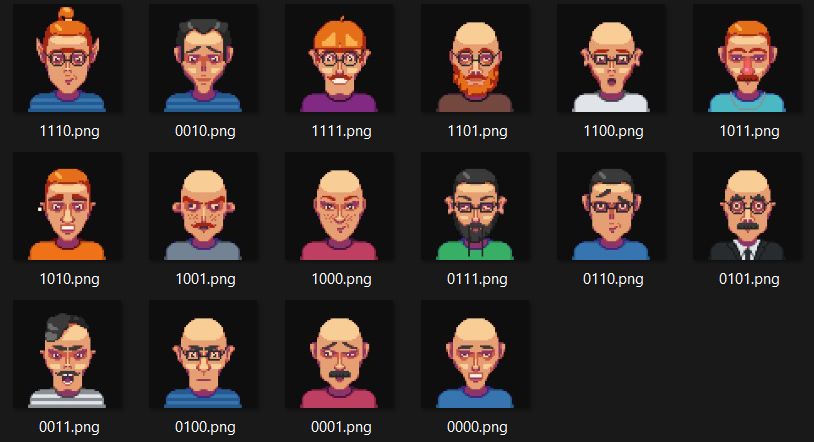
That gives us 2⁴ = 16 suspects.
To help us stay organized, we even named each suspect based on their binary attributes. Easy to track, easy to debug!
Portraits the Smart Way
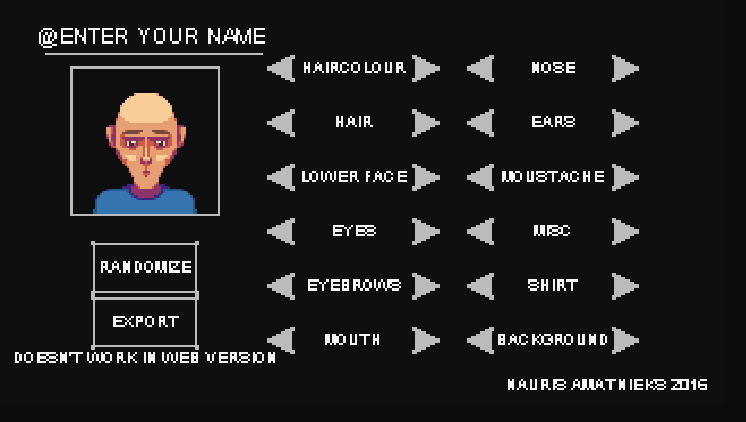
We didn’t have time to draw 16 unique faces, so we used an excellent portrait generator made by aamatniekss. This saved hours while still letting us present distinctive suspects that felt hand-crafted.
Random Suspect Per Run
To keep things fresh, we randomly pick a suspect at the start of the game. This made the story feel less like a fixed script and more like a case with multiple outcomes. Even we didn’t always know who the bomber would be until the run started!
Keeping It Light and Forgiving
We decided early that the suspect-guessing shouldn’t punish players. It’s a story moment, not a skill check. The “gotcha” isn’t important, the fun is in discovering clues throughout the journey.
So the final accusation is just that: a fun closure for the narrative.
Learnings:
- Interactive storytelling beats text dumps. Players skip long text in jam games, so weaving the story into the gameplay. This could be via clues, actions, and deduction but keep them engaged without slowing the pace.
- Design to your constraints, not against them. Limited jam time meant prioritizing rated categories (gameplay, art, audio, theme) and creating a simple, elegant suspect system. Tight constraints pushed us toward a cleaner, more focused narrative design.
Leave a comment
Log in with itch.io to leave a comment.